Ask an Argentine asador what temperature they cook at and you will get a shrug. Ask how they build the fire and you will lose an hour. That order of priorities is the whole technique.
Most asados are lost before the meat touches the grate. Not because of the cut, the salt or some marinade, but because the fire underneath was never right in the first place. No amount of attention afterwards can fix a bed of coals that is too hot in one corner and dying in the other.
The good news is that fire is the most learnable part of this. Meat varies, weather varies, but coals behave the same way every single time. Get that right and a mediocre cut turns out well. Get it wrong and the best beef in the world comes out grey outside and cold inside.
Burn the wood somewhere else
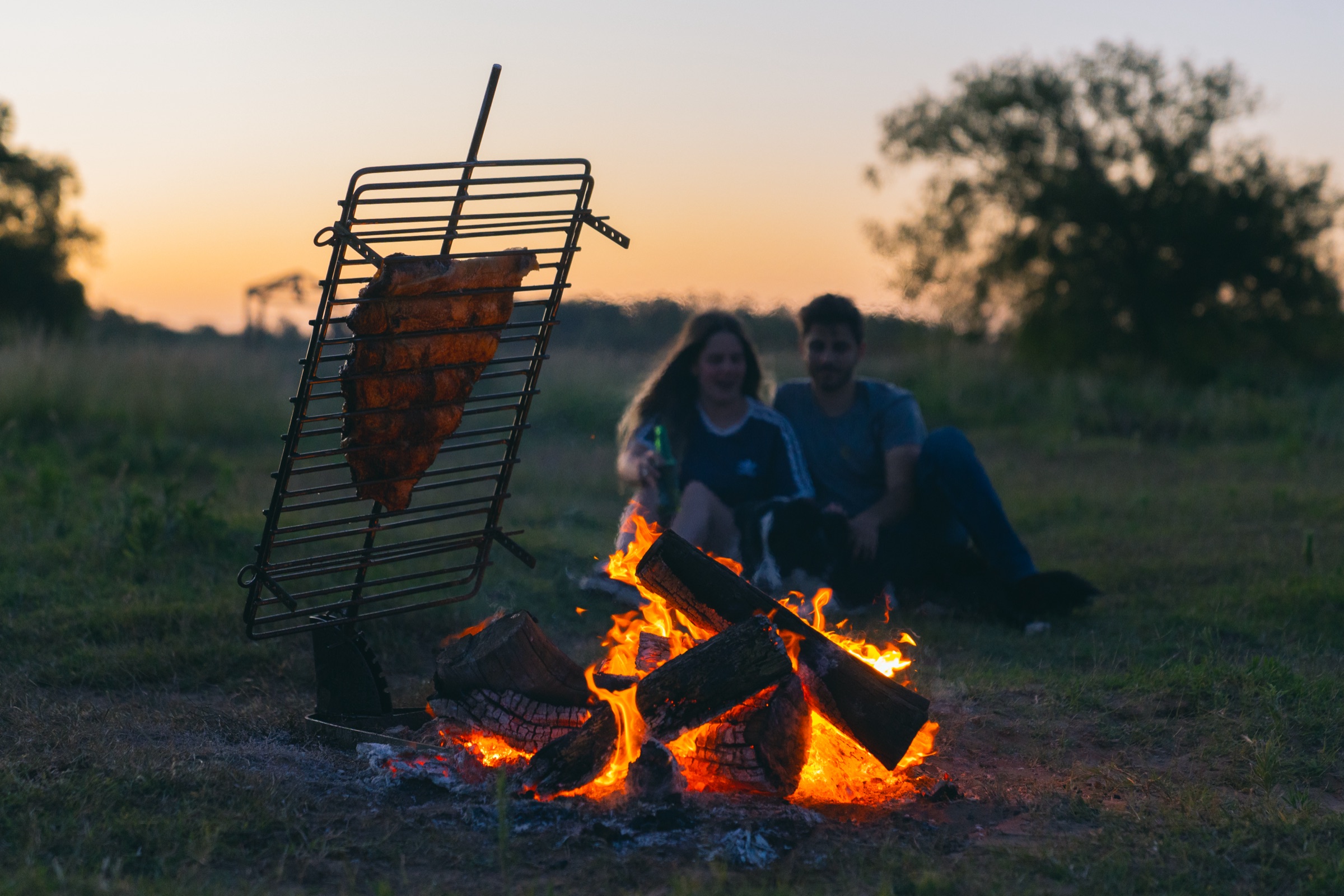
This is the single habit that separates an asado from a barbecue. You do not cook over burning wood. You burn wood in one place, wait for it to collapse into embers, then move those embers under the meat with a shovel or a rake.
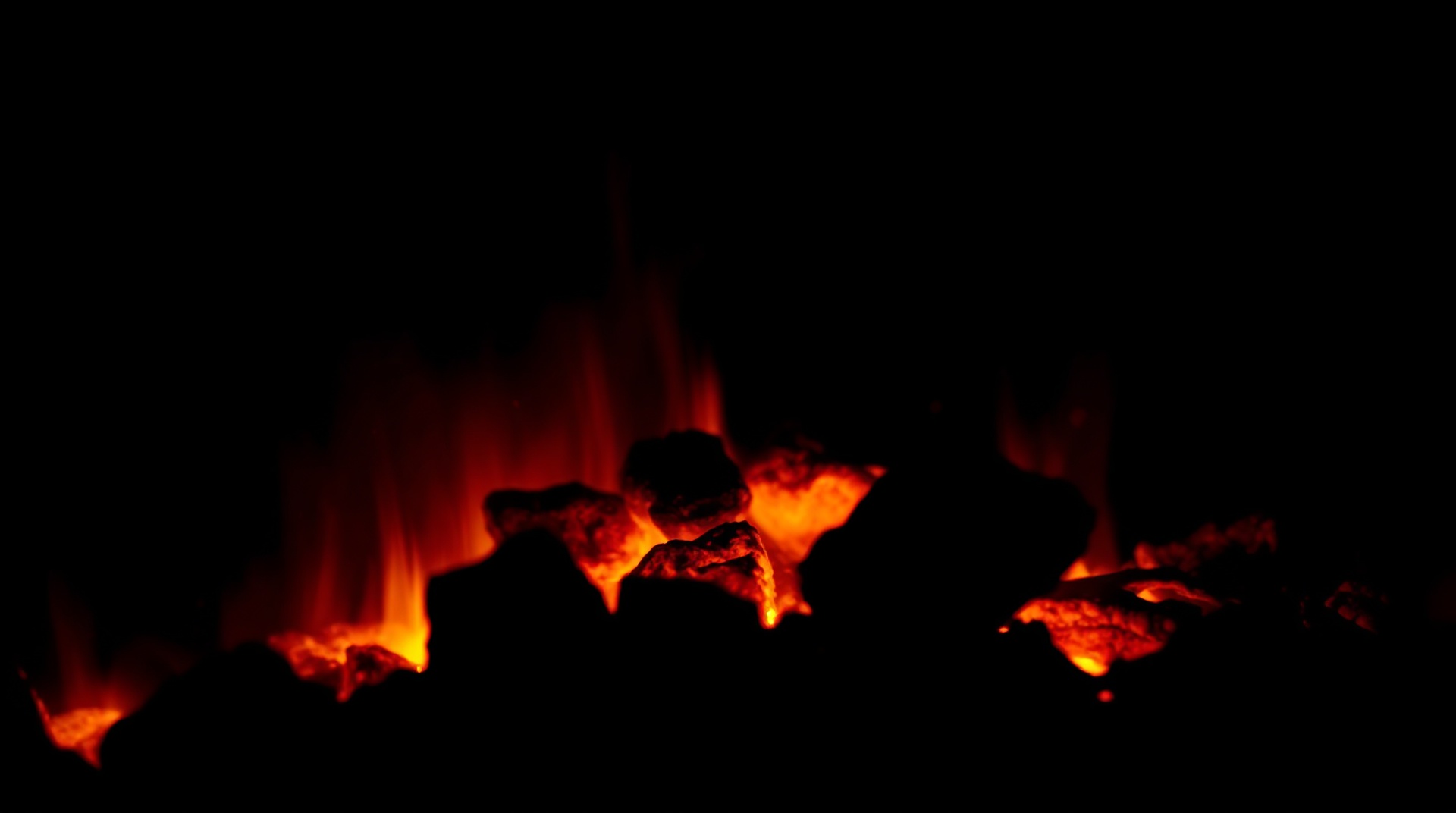
Flames are useless for cooking. They are inconsistent, they deposit soot, and the heat goes up past the food rather than into it. What you want is radiant heat from glowing coals: steady, even, and controllable by how thick you rake the bed.
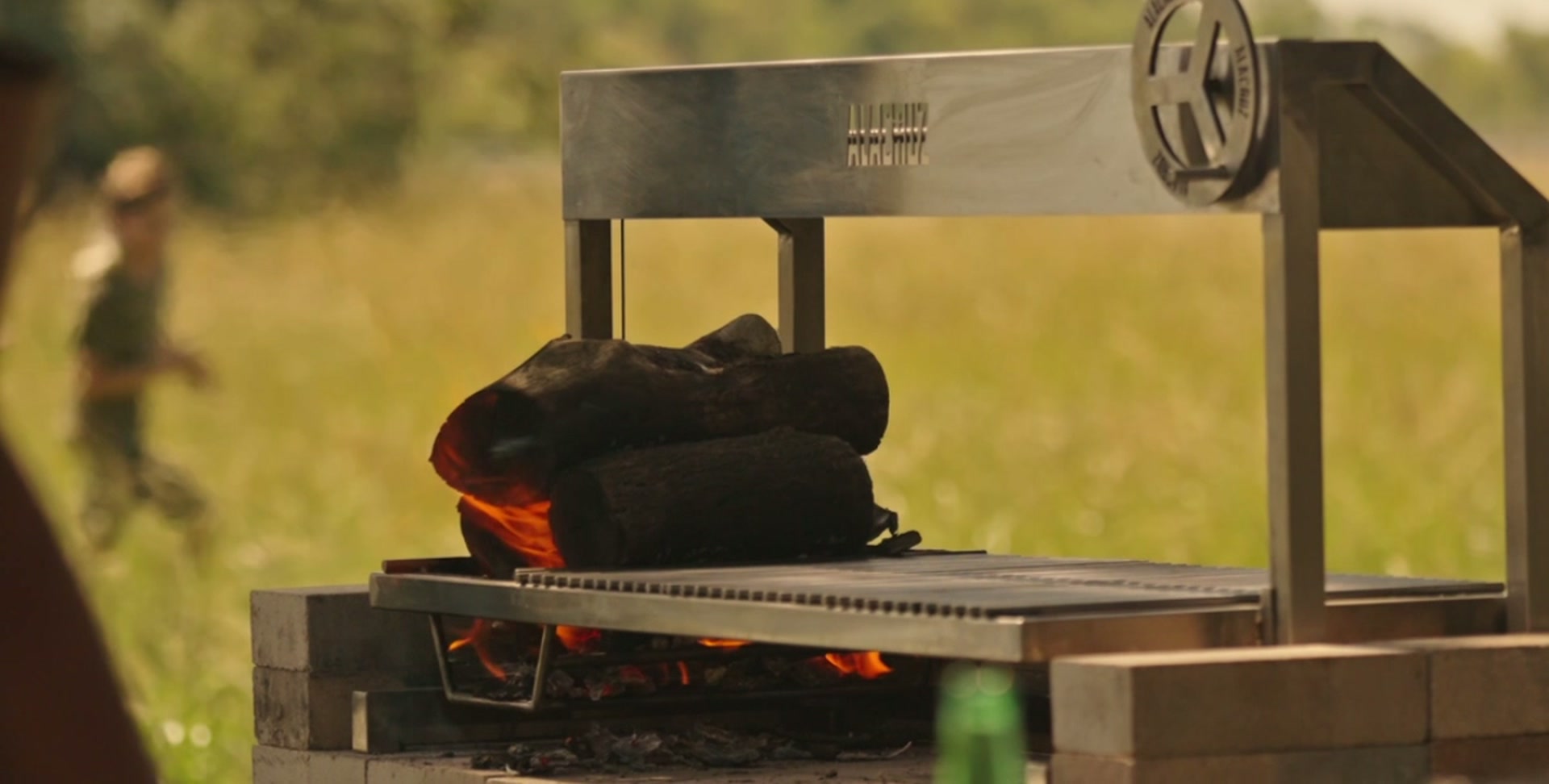
Every A La Cruz grill has a side firebox for exactly this. Light there, let it burn 30–40 minutes until the wood collapses, then feed coals under the grate as you need them. You will keep feeding it the whole cook; that is normal.
What an even 200 °C actually looks like
Forget the thermometer. The measure every asador uses is the back of your hand held about 15 cm above the grate:
- Two seconds before you pull away: too hot. This is for searing a thick steak, nothing else.
- Five to six seconds: this is the zone. Roughly 180–220 °C. Almost everything cooks here.
- Ten seconds or more: a holding zone. Good for keeping things warm or finishing something thick without burning the outside.
A properly built bed gives you all three at once, in different parts of the grill. That is not a compromise; it is the goal.
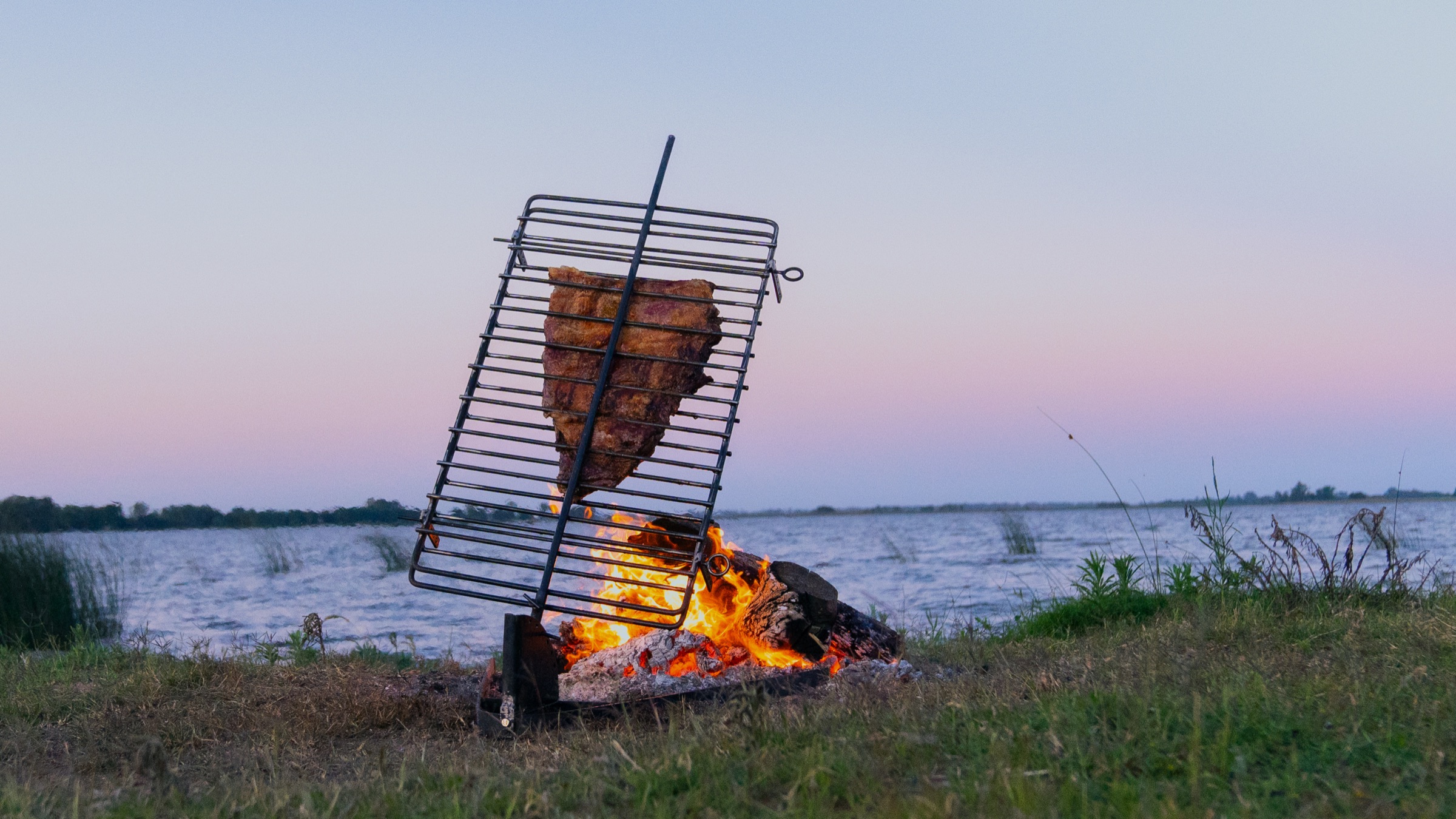
The two-zone bed nobody names
Rake roughly two-thirds of your coals into one half of the firebox, and spread the remaining third thin across the other half. You now have a hot side and a gentle side without moving a single piece of equipment.
Why this beats a single even bed
Because meat does not cook at one speed. A rack of ribs needs 90 minutes of gentle, patient heat; a skirt steak needs three minutes of violence. On a two-zone bed you start the slow things on the thin side, sear the fast things on the deep side, and shuttle between them. On an even bed, you are stuck at whatever compromise you built an hour ago.
Raise the grate to slow down. Lower it to speed up. That is the entire control system.
This is what the crank is for. On a gas grill you turn a knob and wait for the air to change temperature. On an asador you change the distance between the meat and the coals, and the effect is immediate. No lag, no guessing.
Four hours without a crisis
A long cook fails in the last hour, when the fire quietly runs out. Avoid it by keeping a second small fire burning in the brasero the entire time. Every 20–30 minutes, move a shovel of fresh coals under the grate, always toward the deep side, never directly under something delicate.
- 0:00, Light the brasero. Twice as much wood as you think you need.
- 0:35, First coals are ready. Rake the two-zone bed. Grate goes on to heat.
- 0:45, Slow cuts on the thin side, high grate. Salt now, coarse, both sides.
- Every 25 min, Feed a shovel of coals to the deep side. Keep the brasero burning.
- Last 20 min, Fast cuts on the deep side, grate low. This is the only rushed part.
Letting the brasero go out once the meat is on. Twenty minutes later there is nothing left to feed the bed with, and you are cooking on a fading fire with forty minutes of meat still to go.
What to do the first time
Do not start with a whole lamb and fourteen guests. Light a fire on a Tuesday, cook one thing (a provoleta, some chorizos, a single steak) and pay attention to how long the coals hold. Do it three times and you will stop thinking about temperature entirely, which is the point.
Once the fire is a habit rather than a problem, everything else on this site becomes easier: the cuts, the timings, the recipes. They all assume you can build a bed of coals and keep it alive.